
After moving Dad into memory care, I started reflecting on the entire experience.
That’s when I realized something unsettling. This deeply personal family crisis had followed the same patterns I see in B2B marketing every day.
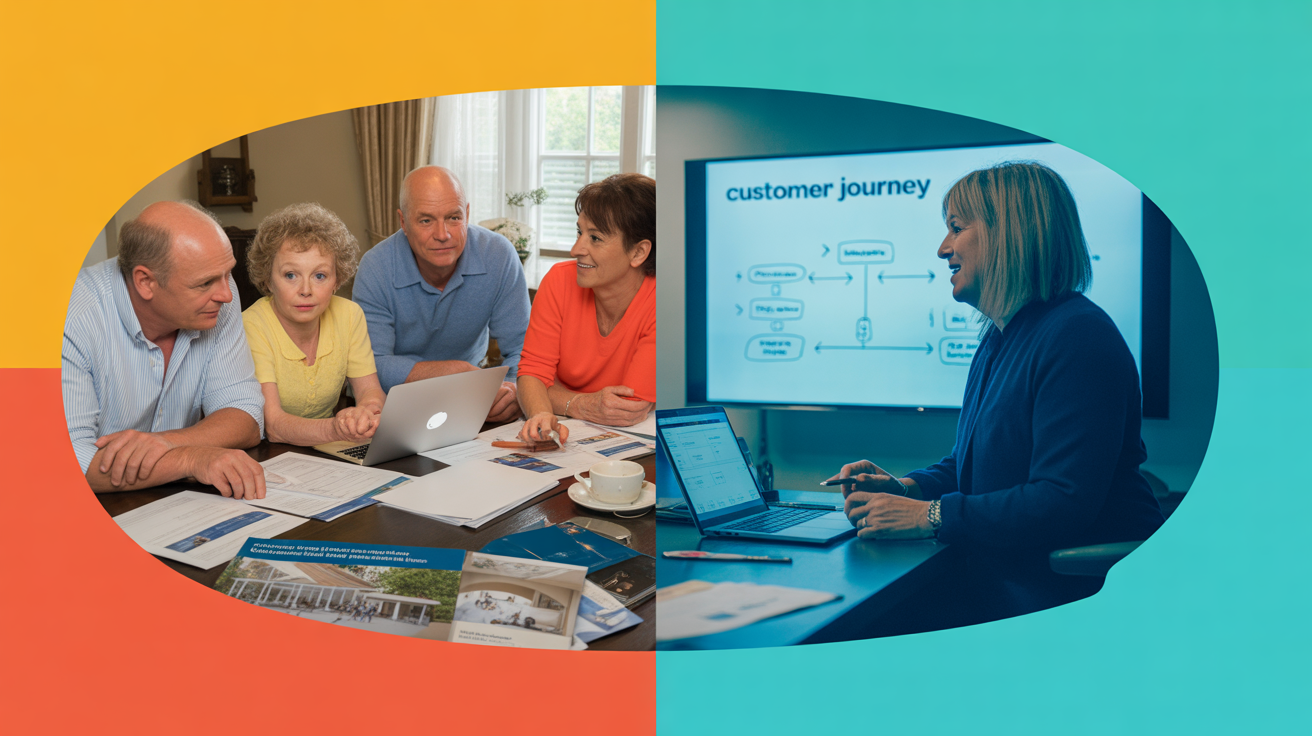
The discovery phase looked like a corporate buying committee. We called Dad’s Senior Center for trusted referrals. They connected us with a broker who specialized in memory care placement. My sister went full researcher mode, compiling ratings from Google, Medicare, and A Place for Mom. She created an Excel matrix with ratings, costs, and locations.
We had multiple stakeholders with distinct roles. Three sisters as influencers. Mom as the final decision maker. The broker as our sales consultant.
But here’s where it gets interesting. Dad, the actual end user, was completely absent from the buying process.
His dementia meant he couldn’t advocate for himself. We were essentially buying on behalf of someone else’s needs while managing Mom’s emotions about letting go. Research shows this triad structure is common in care decisions, but it creates dynamics you never see in traditional purchase journeys.
The Consideration Phase Reality
We had to present the facts to Mom about why Dad needed memory care. Safety for him. Mental health for her.
This wasn’t selling benefits or features. We were selling the necessity of separation to someone who didn’t want to buy. The “value proposition” was heartbreaking but clear.
Timing became everything. Mom’s recent surgery created a window where she was more receptive to help. Without that perfect storm of need and opportunity, the decision might never have happened.
The complexity mirrors what 77% of B2B marketing buyers experience, involving multiple stakeholders, which makes purchases more difficult and time-consuming.
Where Everything Fell Apart
The facility had stellar ratings across care, safety, and quality. Everything looked perfect on paper.
Then came the onboarding disaster.
Eight contract revisions were made based on our due diligence, when it should have taken only one. No dedicated person to guide us through the process. Everyone telling us something different. Coordination non-existent.
We spent days at the facility trying to understand Dad’s care plan and what to expect. The disconnect between their excellent service ratings and terrible administrative experience was jarring. It got me thinking about how tough it is to align marketing, sales, onboarding, and services.
The Universal Business Lesson
Most businesses build their customer journey forward. Marketing makes promises. Sales closes deals. Service delivers the product.
They should build it backwards.
Start with the outcome you want. In this case, happy families, well-cared patients, and integrated teams who understand everyone’s needs. Then ask: How do we ensure this happens while someone’s actively in our care?
- Step back: How do we ensure this happens when someone first arrives?
- Step back again: How do we make this happen during consideration?
- Finally: How do we communicate this in our marketing?
- When you connect services, onboarding, sales, and marketing with the primary objective and work bottom-up, you achieve integrated action items that work for customers and organizations.
This backwards approach transforms how B2B marketing actually works. This is how we approach client work at Growth Marketing Werks. We think about what clients hire us for and the experience we want. Then we figure out how to execute it at the service level, onboarding level, sales conversation, and marketing level.
We’re small, so alignment is easier. In larger organizations with multiple stakeholders running different departments, this backwards integration approach to B2B marketing becomes the difference between an average business and a five-star one.
The memory care facility had excellent ratings but missed the most critical part of the customer experience—the transition moment when families are most vulnerable and need the most support.
That gap between marketing promise and service delivery reality is where businesses lose customers, even when their core product is excellent.
In this case, we’re still customers at that memory care facility. It’s getting easier each day as we piece the experience together. Despite the onboarding challenges, we’ll be there for a while because the staff takes incredible care of Dad.
Even when businesses get the customer journey wrong, they can maybe still win with exceptional service delivery. It’s all a matter of how much the buyer has already committed.
If your customers experience your onboarding process and compare it to your marketing promise, what would they say?
Author: Suzanne Corriell, CEO | Founder