
Sales cycles have stretched. HIPAA scrutiny has intensified. And whether you're marketing a home care franchise or a clinical software platform, you're now dealing with buying committees, not single decision-makers. Add in patients who research every provider online before ever picking up a phone, and the pressure compounds fast.
Healthcare organizations face a dual bind: patients want faster access to care, while boards and CFOs demand compliant, ROI-driven marketing that can survive a budget review. Generic tactics borrowed from retail or SaaS marketing don't hold up under either demand.
This guide breaks down the strategies that actually move the needle for healthcare lead generation in 2026, plus how to vet a partner capable of executing them without putting your organization at compliance risk.
Key Takeaways
- Compliant, multi-touch campaigns outperform one-off tactics in healthcare's committee-driven buying process
- A diversified media mix beats single-channel bets for patient and health-tech acquisition
- Pipeline attribution and transparent reporting are baseline expectations, not bonus features
- Flat-fee, compliance-savvy partners reduce wasted spend and misaligned incentives
Why Healthcare Lead Generation Needs a Different Playbook in 2026
Standard business and consumer marketing assumes a fairly linear path: awareness, interest, conversion. Healthcare breaks that model in three ways.
Regulatory exposure changes everything. HIPAA governs how you can track, retarget, and even talk to prospective patients or health-system contacts. A pixel that works perfectly fine for an eCommerce brand can create a compliance problem the moment it touches health-condition data.
Buying committees slow everything down. A 2025 HIMSS survey of 211 healthcare executives found that nearly 60% of organizations involve at least five people in a purchasing decision, and almost a quarter involve ten or more. IT participates in 95% of those buying groups, turning what looks like a single lead into a multi-stakeholder negotiation.
Trust barriers slow conversion further. Patients research obsessively before they ever contact a provider. Press Ganey's 2023 consumer survey found that 58.8% of healthcare consumers had used a search engine to find care, relying on digital sources over provider referrals by more than 3 to 1.

The strategies below are ranked by how well they address these three pressures: compliance readiness, trust-building, and healthcare's notoriously long conversion timelines.
Top Healthcare Lead Generation Strategies for 2026
These strategies are selected based on compliance readiness, channel diversification, measurable ROI, and applicability across both patient-facing and enterprise healthcare organizations.
Full-Funnel, Multi-Channel Media Campaigns
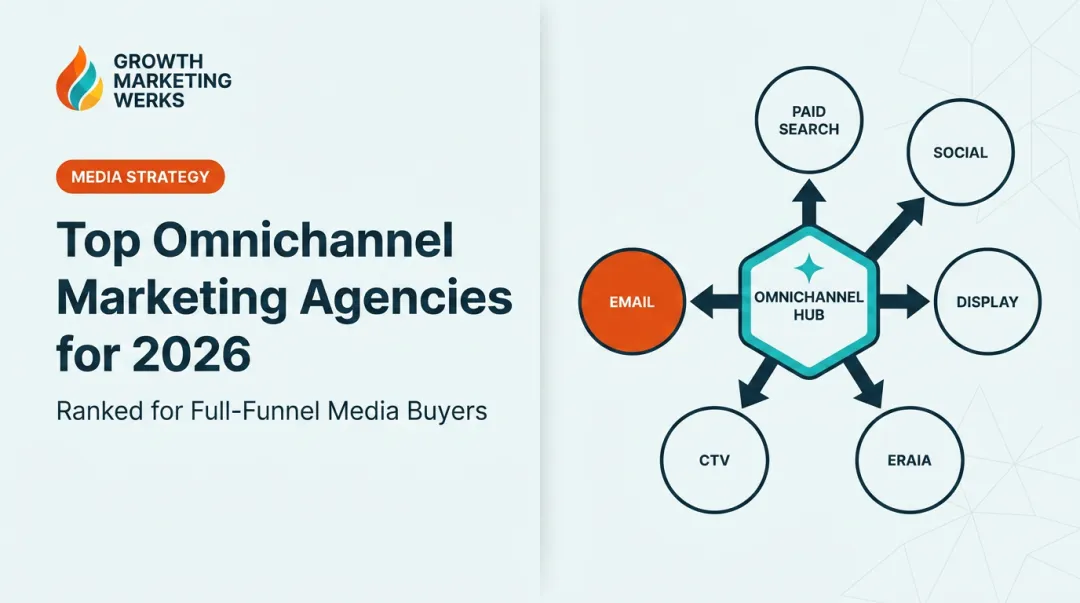
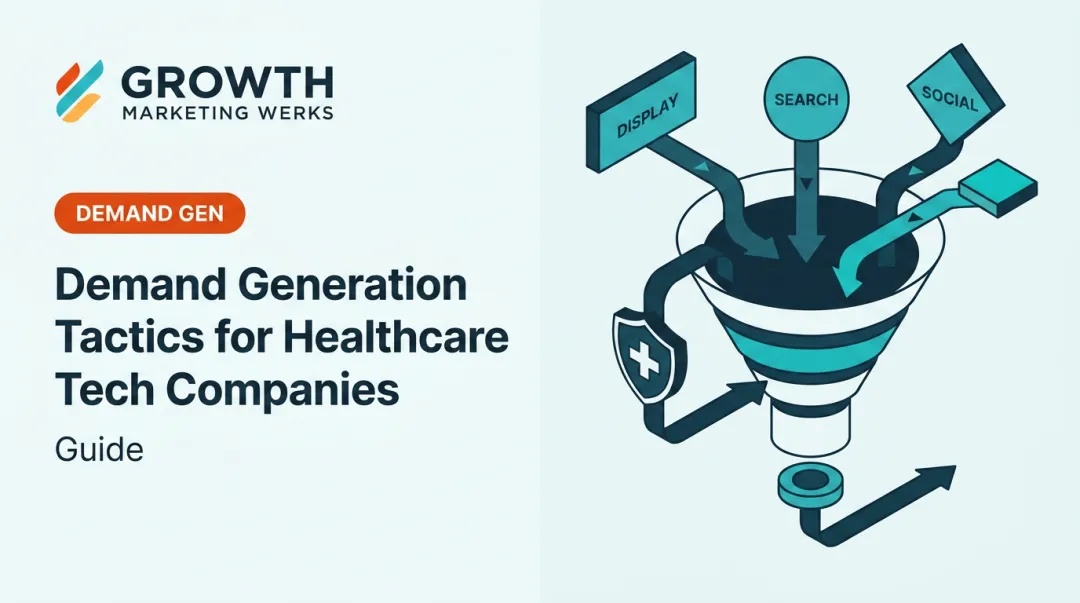
Relying on a single channel, say, paid search alone, leaves too much on the table. Healthcare buyers and patients bounce between search, social, email, and industry publications before deciding. A single-channel bet misses most of that journey.
The stronger approach builds a full-funnel portfolio of campaigns across channels rather than placing a single wager. For senior care and aging-services clients specifically, that often means combining:
- Programmatic display and video for reach and retargeting
- Paid social (Meta, LinkedIn) targeting adult-child decision-makers
- Always-on search capturing in-market demand
- Publisher-direct placements on trusted senior-care and healthcare networks
- CTV, streaming audio, and print for community-level awareness
Growth Marketing Werks applied this portfolio mindset for a mission-driven insurance client, layering niche publications, local broadcast, social, programmatic, and always-on search across major DMAs. The result: 45% unaided brand awareness, a 31% quote-to-policyholder conversion rate, and a 7x return on ad spend from search alone. Diversification, not a single hero channel, drove that outcome.
Account-Based Marketing (ABM) for Health Systems and Enterprise Buyers
When your buyer isn't one person but a five-to-ten-person committee inside a hospital system, spray-and-pray campaigns waste budget. ABM lets you target specific health systems or care networks with messaging tied to their actual initiatives, expansion plans, compliance deadlines, technology refreshes, rather than generic pitches.
Because healthcare's average deal size and sales cycle both run long, higher investment per target account is justified. One vendor-reported healthcare ABM case from Demandbase found a 41% higher meeting-booking rate for targeted accounts versus untargeted ones, a useful directional signal, though it's a single case study rather than an industry norm.
Growth Marketing Werks has seen similar patterns play out over multi-year engagements. One long-term enterprise client evolved from a single vertical campaign into a full ABM program supporting enterprise sales, layering LinkedIn account targeting, programmatic ABM, and coordinated sales outreach. Over three years, that shift contributed to +179% sales growth, +141% SQL growth, and +85% MQL growth.

HIPAA-Compliant Content Marketing and SEO
Educational content, such as blogs, guides, and explainer videos, builds trust with patients and clinical stakeholders alike while improving organic visibility for high-intent searches. It's also one of the few channels where compliance and conversion goals genuinely align: helpful, non-promotional content rarely triggers PHI concerns the way ad tracking pixels can.
The stakes are real. 22.3% of consumers say search engines are their first stop when selecting a new primary care provider, compared to 18.7% who start with a referral, according to Press Ganey's research cited earlier.
A few compliance guardrails matter here:
- Cookie banners and "accept" buttons are not valid HIPAA authorization, per HHS guidance
- Any tracking vendor handling PHI needs a signed Business Associate Agreement (BAA)
- Marketing use of PHI generally requires explicit written authorization, with limited exceptions for treatment and case management
LinkedIn and Professional Network Outreach
Clinicians and healthcare executives don't respond well to cold pitches. They respond to peer validation. A 2024 peer-reviewed study of 1,862 healthcare professionals who use social media found that 52.2% used LinkedIn, largely for continuing education, peer discussion, and clinical news, not sales outreach.
That means the winning move is sharing credentialed, educational content first, and letting authority build before any sales conversation starts. In practice, this looks like:
- Publishing sponsored content addressing specific clinical or operational challenges
- Targeting named accounts within health-system referral networks
- Using attendee-targeting around industry conferences to extend reach beyond the event itself
Strategic Partnerships and Referral Programs
Peer recommendations carry more weight in healthcare than almost any ad claim can. Partnering with complementary vendors, consultants, or industry associations creates warm introductions that skip months of trust-building.
This works especially well for senior care and aging-services organizations, where referral relationships with health systems, discharge planners, and elder-care consultants often outperform cold outreach entirely. Structuring these as coordinated account-based programs, rather than one-off handshake deals, makes the referral pipeline repeatable instead of accidental.
Data-Driven Lead Scoring and AI-Assisted Qualification
Not every website visitor deserves a sales call. Behavioral scoring models help prioritize leads showing real intent, such as pricing requests, compliance documentation downloads, or repeat visits to a solutions page, over passive content browsers.
Adoption is already mainstream: CallRail's 2025 survey found that 68% of healthcare providers planned to use AI for lead qualification, and a follow-up study found 53% were already using it for lead scoring specifically.
Given that a meaningful share of healthcare purchases take 12 months or longer, this kind of prioritization prevents sales teams from burning effort on leads that aren't ready.
In practice, this means:
- Tracking MQL-to-SQL progression rather than raw lead volume
- Using CRM-back attribution to see which touches actually move contacts forward
- Applying suppression logic so closed-won or churned accounts don't clutter active pipelines
Transparent Reporting and Pipeline Attribution
Healthcare stakeholders no longer accept impression counts as proof of ROI. They want to see which specific channels and touchpoints actually drove pipeline.
This is where a dedicated data aggregation and visualization approach earns its keep. Growth Marketing Werks powers client dashboards through Datorama, giving organizations visibility into the full user journey, from first impression to closed opportunity, rather than isolated channel snapshots.
That visibility matters more in healthcare than almost any other vertical. The gap between first touch and closed deal can span a year or more.
How to Choose the Right Healthcare Lead Generation Approach or Partner
The most common mistake healthcare organizations make? Hiring a generalist agency with no healthcare compliance experience and no plan for mapping multi-stakeholder buying committees. The campaigns look fine on paper. They just don't convert.
A few evaluation factors matter more than brand reputation:
| Evaluation Factor | Why It Matters |
|---|---|
| HIPAA/compliance readiness | Prevents PHI mishandling in tracking, retargeting, and CRM workflows |
| In-house platform certifications | Ensures campaigns are built by certified specialists, not generalists |
| Flat-fee vs. spend-based pricing | Removes the incentive to inflate budgets rather than optimize them |
| Full-funnel, omnichannel capability | Avoids the single-channel trap that underperforms in healthcare |
That third factor deserves extra attention. Agencies paid a percentage of media investment have a built-in incentive to grow your budget, not necessarily your results. A flat-fee "strategy-first media expert" model flips that: the agency only benefits when the client grows and stays.
Growth Marketing Werks operates this way, working with mission-driven and aging-services organizations through a full-funnel, data-transparent approach. Rather than specializing in a single platform, its team holds certifications across:
- Google Campaign Manager
- Meta
- The Trade Desk
- Datorama
- Demandbase ABM Foundations
Before signing anything, ask about scalability too. A partner who can launch a strong initial campaign but can't optimize it over 12 to 24 months isn't built for healthcare's timelines.
Measuring ROI and Key Metrics for Healthcare Lead Generation
Healthcare's long decision windows make attribution both harder and more important than in most industries. The core metrics to track:
- Cost per lead (CPL) across each channel, not blended averages
- Lead-to-opportunity conversion rate, tracked through MQL and SQL stages
- Sales cycle length, since healthcare deals can span months or years
- Channel-level attribution, showing which touchpoints actually influenced pipeline
For context, patient-facing paid search benchmarks give a useful floor: LocaliQ's 2026 healthcare study found a median 8.09% conversion rate and $66.02 median cost per lead across search campaigns. Those costs vary widely by specialty:
| Specialty | Median Cost Per Lead |
|---|---|
| Dermatology | $18.54 |
| Mental Health | $141.17 |

health-tech CPL and lead-to-opportunity benchmarks are harder to pin down publicly, which is exactly why dashboard-level attribution matters more than industry averages. Growth Marketing Werks has documented CPL reductions of 47% to 61% for clients through unified search-and-social strategies. Sales pipeline ROAS above 2.5x followed, proof that the right measurement setup surfaces real, actionable gains rather than vanity metrics.
Dashboards need to show pipeline movement across extended timelines, not just 30-day snapshots, because a lead that goes quiet for four months isn't necessarily a dead lead in healthcare.
Conclusion
No single tactic carries healthcare lead generation on its own in 2026. Success comes from combining compliant, diversified channels, ABM for complex accounts, content that builds trust, and transparent measurement that proves what's actually working.
Getting this mix right often hinges on the partner executing it. When evaluating a partner, weigh compliance readiness, pricing alignment, and full-funnel capability more heavily than brand name recognition. The agencies still pushing single-channel, commission-based models are the ones least equipped for where healthcare marketing is headed.
If you're weighing your options for 2026, Growth Marketing Werks offers a strategic media audit tailored to aging-services and mission-driven organizations. It's a practical next step for anyone unsure whether their current media mix is built for how healthcare buyers really decide.
Frequently Asked Questions
How do you generate healthcare leads?
Combine HIPAA-compliant content marketing, targeted paid media across search and social, account-based marketing for larger buyers, and referral partnerships. This combination attracts and qualifies healthcare leads more consistently than any single tactic can on its own.
What does healthcare lead generation cost?
Costs vary widely by specialty and channel. Patient-facing search campaigns median around $66 per lead, but range from roughly $18 to over $140 depending on the specialty and competition level.
How long does it take to see results from healthcare lead generation?
Initial qualified leads often appear within a few months of launch. Full revenue impact typically takes longer, since healthcare evaluation cycles can extend well beyond a year for complex purchases.
What's the difference between healthcare and general enterprise lead generation?
Healthcare adds HIPAA compliance requirements, multi-stakeholder buying committees often involving five or more people, and considerably longer sales cycles than most standard enterprise verticals.
Can healthcare lead generation be automated while staying HIPAA compliant?
Yes, with the right safeguards in place. That means encrypted platforms, documented consent tracking, signed Business Associate Agreements with any vendor touching PHI, and audit logging throughout the process.
What marketing channels work best for healthcare lead generation in 2026?
A diversified mix, programmatic, SEO and content, LinkedIn, and partnership-driven referrals, consistently outperforms single-channel efforts, particularly given healthcare's longer and more complex buying journeys.