](https://file-host.link/website/growthmarketingwerks-1vcu9i/assets/refined-images/1789026535579000_5f43498f3f95472484eadd09e33dec67/2x_360.webp)
Introduction
Picture an adult daughter searching for memory care for her father. She Googles "memory care near me" at 11 p.m., clicks a social ad the next day, and browses a community website.
Then she calls, and the person on the phone has no idea she ever visited the site. She has to explain her father's situation three times before booking a tour.
This is the reality for many families evaluating organizations serving the older adult market today. Marketers often run paid social, SEO, referral partnerships, print, and events as separate efforts, with no shared data connecting them.
The result: wasted media investment, inconsistent messaging, and lost move-ins or hires.
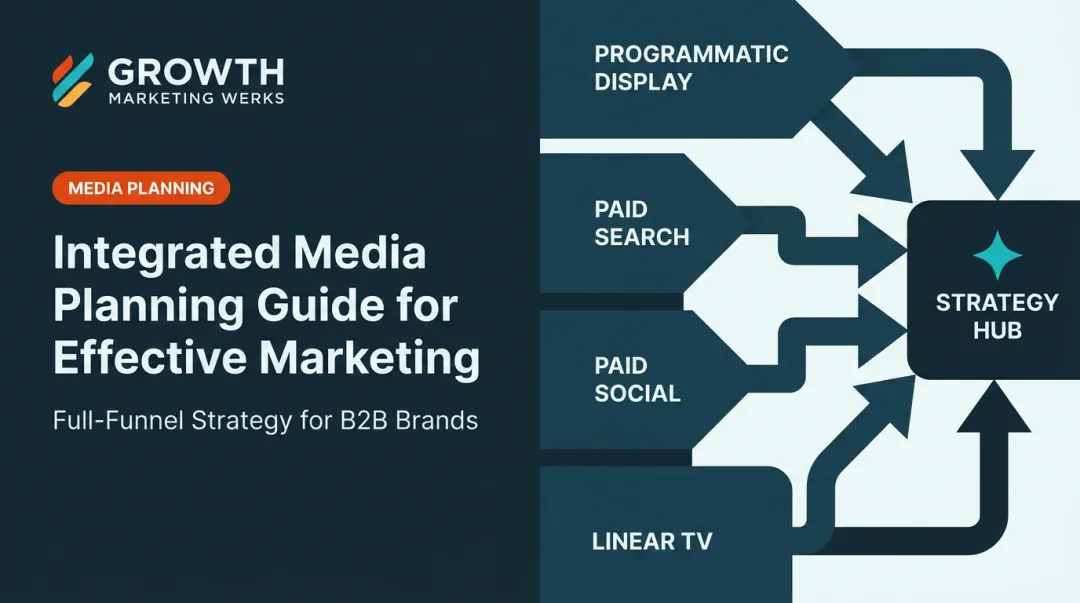
This guide breaks down what omnichannel campaigns actually mean for organizations serving the older adult market and walks through the four C's that make them work. You'll get a step-by-step framework, complete with real examples, for connecting every touchpoint into one coordinated strategy.
Key Takeaways
- Multiple decision-makers drive buyer journeys for organizations serving the older adult market, requiring consistent messaging across channels
- Omnichannel unifies data and messaging across platforms; multichannel simply adds more channels
- The four C's (Customer Experience, Content, Context, and Collaboration) anchor a working omnichannel strategy
- Full-funnel KPIs like cost-per-tour matter more than cost-per-lead alone
- Consolidating media partners improves consistency and cost transparency
Why Omnichannel Campaigns Matter for Organizations Serving the Older Adult Market
Multiple Decision-Makers, One Journey
Senior care decisions rarely involve just one person. Adult daughters and daughters-in-law most often lead the search, but healthcare professionals, discharge planners, and the senior themselves all weigh in along the way.
A 2025 A Place for Mom survey found that more than two-thirds of family caregivers who secured care searched for 60 days or less once they began actively looking. That's a short window to build trust across every channel a family touches.
Consistency matters because these journeys compress fast once they start. A prospect who sees conflicting messaging between an organization's Facebook ad and its website copy loses confidence right when they need reassurance most.
This isn't unique to retail either. A Harvard Business Review study of 46,000 shoppers found that omnichannel customers made 23% more repeat visits within six months compared to single-channel shoppers. The study wasn't about senior living, but the underlying principle transfers: connected experiences build repeat engagement and trust.

The Workforce Side of Omnichannel
Lead generation isn't the only place omnichannel thinking applies. Caregiver shortages make employer branding just as urgent.
The Bureau of Labor Statistics projects home health and personal care aide employment to grow 17% from 2024 to 2034, adding roughly 765,800 openings every year. That's a workforce gap most providers can't fill with a single job board post.
Talent acquisition brands like TalentReef apply the same cross-channel principles to recruitment that organizations serving the older adult market apply to census growth: coordinated messaging across every channel a candidate encounters, not disconnected postings.
A cohesive brand voice, whether it's reaching a prospective resident's family or a prospective caregiver, is what earns trust before anyone commits.
Omnichannel vs. Multichannel: What Marketers at Organizations Serving the Older Adult Market Need to Know
Multichannel means showing up in multiple places: a website, a Facebook page, a print ad in the local paper. Omnichannel means those places are connected, sharing data and reinforcing one message.
| Multichannel Community | Omnichannel Community |
|---|---|
| Runs disconnected Facebook ads | Links CRM data to ad platforms for retargeting |
| Static website with no follow-up trigger | Geofenced retargeting after a website visit |
| Print ads with generic messaging | Referral partner communications aligned to digital campaigns |
| No shared reporting across channels | Unified dashboard tracks performance across every channel |
The practical difference shows up in daily operations. Omnichannel requires marketing, admissions, and community relations teams to share data and calendars, something multichannel efforts skip, since each channel operates independently.
Without that collaboration, a family might receive a "schedule your tour" email the same week admissions already booked them. Small disconnects like this erode confidence during an already stressful decision.
The Four C's of Omnichannel Campaigns (Applied to Organizations Serving the Older Adult Market)
A framework popularized by EDHEC Business School organizes omnichannel strategy around four principles: Customer Experience, Content, Context, and Collaboration. Here's what each looks like in the context of organizations serving the older adult market.

Customer Experience
Every touchpoint (a Google ad, a website visit, a tour follow-up call) feels like a continuation of the same conversation, not a fresh start. If a family mentions memory care needs on a call, the next email shouldn't pitch independent living.
Content
Messaging shifts by persona. An adult child researching memory care options months in advance needs educational content: level-of-care explainers, cost comparisons, checklists. A discharge planner coordinating a post-hospital placement needs urgency and clear next steps, not a blog post.
Context
The right message depends on where someone is in their journey. Someone who viewed your pricing page yesterday sees a tour-scheduling offer today, not a generic brand awareness ad. Context turns a passive browser into a scheduled visit.
Collaboration
None of this works without shared visibility. Marketing, admissions, referral development, and community relations teams need shared data and calendars, or you risk:
- Sending conflicting messages within the same week
- Missing follow-ups when a lead moves between teams
- Confusing referral partners with a different story than the family hears
Building an Omnichannel Campaign Strategy for Organizations Serving the Older Adult Market: Step-by-Step
Building this out doesn't require a massive overhaul overnight. It requires sequencing the right steps in order.
Map the full journey. Chart every stage (awareness, research, tour, move-in, referral) and identify which channels touch each one: search, social, referral sources, print, events, CRM.
Unify your data. Pull paid media, website analytics, CRM, and referral tracking into a single dashboard. Aggregation platforms like Datorama let marketers see the full funnel, from first click to move-in, instead of piecing together separate reports.
Match channels to personas. Adult children, older adults, and professional referral sources don't use the same platforms. Build a diversified media mix instead of over-indexing on whichever channel is easiest to manage.
Standardize creative and messaging. Paid social, CTV, search, and print all reinforce the same brand promise and calls-to-action, even when the format changes.
Track full-funnel KPIs. Cost-per-lead alone hides the real story. Track cost-per-tour and cost-per-move-in so you know which channels actually influence occupancy, not just clicks.
Consider a strategy-first media expert. Consolidating media partners under one advisor, like Growth Marketing Werks, which works specifically with organizations serving the older adult market, applies flat-fee, full-funnel portfolio management. That means incentives align with occupancy growth, not media investment volume.

Real-World Omnichannel Campaign Examples for Organizations Serving the Older Adult Market
Senior Living: Awareness to Tour Booking
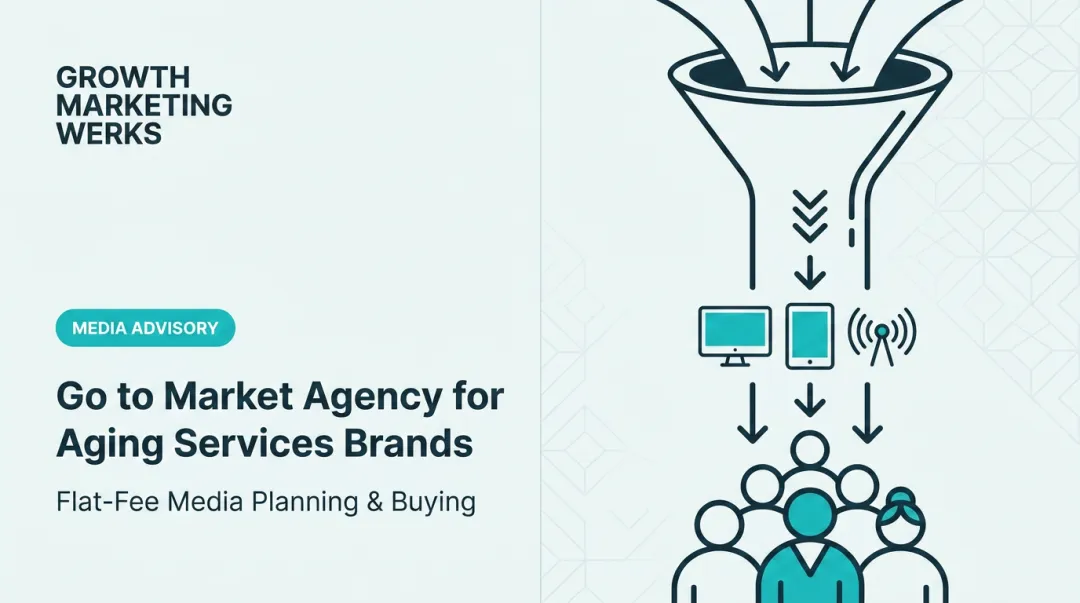
A coordinated senior living campaign might pair CTV/streaming for top-of-funnel awareness with geofenced display retargeting near hospitals and physician offices, reaching families during discharge planning conversations. Google Search then captures high-intent keyword searches. All three feed one CRM-triggered nurture sequence, so a family who saw a CTV ad and later searched "assisted living near me" gets a consistent, personalized follow-up instead of a cold restart.
Home Care and Hospice: Local Trust Signals
For home care or hospice agencies, paid local search support and Google Business Profile-related tactics pair naturally with co-branded referral partner marketing: physicians and discharge planners sharing consistent messaging with the agency. Automated review-generation emails sent post-service round out the loop, building the local trust signals families check before calling.
Staffing and Recruitment: The TalentReef Parallel
Caregiver shortages call for the same coordinated thinking applied to hiring. Job board ads, employer-brand social content, and SMS follow-up can work together in a staged sequence.
Growth Marketing Werks used this approach for TalentReef's enterprise sales campaign: a focused vertical launch, then horizontal expansion, then account-based marketing layered in. The result was an 85% increase in marketing qualified leads and a 179% increase in bookings. Recruitment marketing follows the same staged, connected structure.
The common thread across all three: every channel feeds one centralized data source, so marketers can see which touchpoints actually drive move-ins or hires, not just clicks.

Common Omnichannel Mistakes Marketers at Organizations Serving the Older Adult Market Make
Even well-intentioned teams fall into predictable traps:
- Disconnected referral tracking. Measuring digital leads and referral sources in separate systems hides your true cost per acquisition, turning budget decisions into guesswork.
- Generic, one-size-fits-all messaging. An adult child researching options for months and a discharge planner needing placement in 48 hours have different emotional states, so the same message won't land with both.
- Too many disconnected vendors. Each vendor optimizes for easy-to-measure metrics like clicks and impressions rather than what drives occupancy, so consolidating partners under one strategic advisor improves consistency and cost transparency.
Frequently Asked Questions
What are omnichannel campaigns?
Omnichannel campaigns integrate messaging, data, and channels into one seamless customer experience. Unlike running channels independently, every touchpoint shares context and reinforces the same journey.
What are examples of omnichannel campaigns?
Retail loyalty apps and buy-online-pickup-in-store programs are classic examples. For organizations serving the older adult market, this looks like CTV ads, geofenced retargeting, and search all feeding one CRM nurture sequence.
What are the four C's of omnichannel campaigns?
Many marketers define it as Customer Experience, Content, Context, and Collaboration. Together they ensure every touchpoint feels personalized, relevant to the moment, and coordinated across teams.
How is omnichannel marketing different for organizations serving the older adult market?
Organizations serving the older adult market involve multiple decision-makers, longer consideration cycles, and dependency on professional referral partners: factors that most consumer omnichannel playbooks don't account for.
Which channels do marketers at organizations serving the older adult market prioritize in an omnichannel strategy?
A mix of search, social, CTV/streaming, geofencing, referral partner marketing, and CRM-driven follow-up, weighted based on which channels each persona (adult children, older adults, referral sources) actually uses.
How do you measure ROI in an omnichannel senior care campaign?
Track full-funnel metrics like cost-per-tour and cost-per-move-in rather than cost-per-lead alone. Unified data platforms make this possible by connecting every channel to actual occupancy outcomes.