
Media mix gets talked about like marketing theory, but its real value shows up in campaign performance, budget efficiency, and how well a brand survives channel volatility. This article isn't here to define the term for a textbook. It's here to explain why a media mix matters in practice, especially for organizations trying to grow without wasting a single dollar.
Key Takeaways
- A media mix blends paid, owned, and earned channels to reach your audience and hit business goals.
- A well-built mix cuts risk, covers every funnel stage, and boosts ROI through data-driven budgets.
- Skipping media mix strategy causes wasted spend, inconsistent leads, and single-channel risk.
- Real value comes from consistent tracking and acting on insights, not just collecting data.
What Is a Media Mix?
A media mix is the specific combination of channels a brand uses to deliver its marketing message and reach its audience. That includes digital and traditional tactics, paid placements, owned properties, and earned coverage.
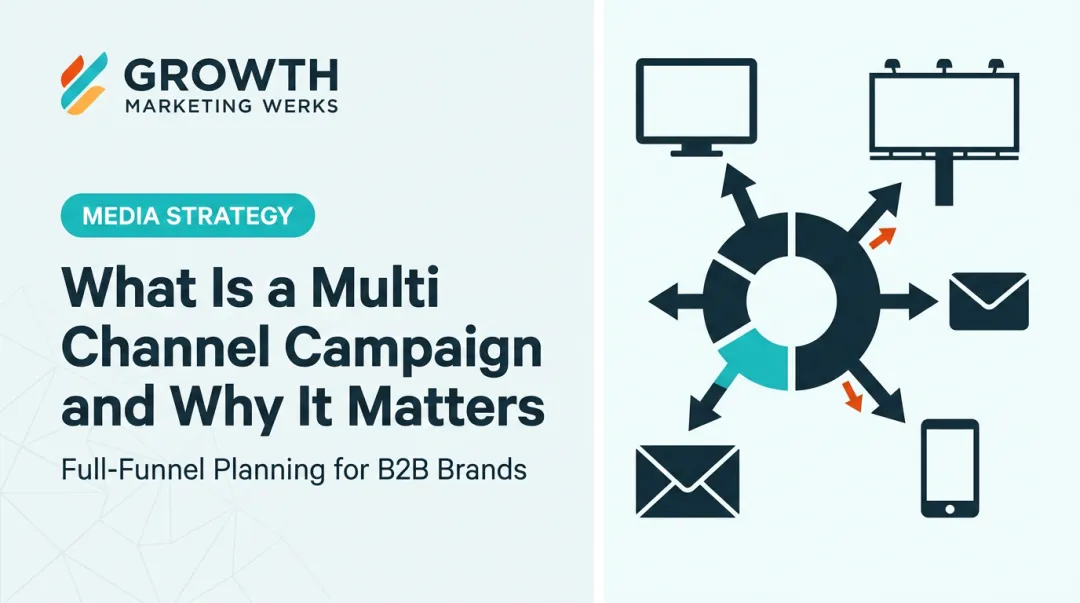
In practice, a media mix blends multiple channels based on the audience and the goal at hand. Common components include:
- Connected TV (CTV)
- Paid social
- Search
- Direct mail
- Out-of-home There's no universal formula. A senior living brand's mix will look different from an enterprise software company's, because the audiences behave differently and the buying journeys don't match.
A media mix is a means to an outcome, whether that's awareness, pipeline growth, or revenue, not a checklist of channels. Channels are tools; growth is the target.
Key Advantages of a Media Mix
The advantages below focus on measurable, operational impact, not abstract marketing theory. Each one ties to outcomes organizations actually track: cost efficiency, audience reach, risk exposure, and revenue contribution.
Reduces Risk and Builds Resilience
Spreading investment across multiple channels protects overall performance if any single channel underperforms or disappears entirely. When a platform changes its algorithm, tightens policy, or hikes CPMs, the rest of the mix keeps producing results while that one channel gets recalibrated.
Over-reliance on a single channel creates a fragile program. One external change and the whole campaign can stall.
This is why cross-channel measurement is such a persistent headache. According to the ANA's 2026 State of Marketing Measurement Report, 53% of marketers struggle to unify measurement across channels for optimization. If unifying data is hard, imagine the fallout from having no fallback when a primary channel dips.
A diversified mix also gives budgets the "runway" to test new channels without risking total performance.
Our work with Pinnacol Assurance, Colorado's largest workers' comp insurer, shows this in action. When COVID-19 upended their strategy, the campaign survived because it was already spread across local TV, social, programmatic, and search.
Because no single channel held the entire budget, the team could pivot messaging and spend without a collapse. The results held, delivering 70% year-over-year growth in unaided brand awareness and a sustained 45% unaided awareness rate by 2023.
KPIs impacted:
- Cost per acquisition
- Overall ROAS stability
- Campaign downtime or disruption rate
This matters most for organizations with limited budgets, seasonal demand cycles (think senior care enrollment periods), or heavy reliance on just one or two ad platforms.
Reaches Audiences at Every Stage of the Funnel
Different channels perform differently depending on where a prospect sits in their buying journey. CTV and social build awareness. Retargeting and search move consideration forward. Email and direct mail keep customers engaged after conversion. A well-built mix sequences these tactics instead of leaning on one channel to do everything.
Single-channel campaigns typically reach audiences at only one funnel stage, leaving gaps for competitors to fill.
Nielsen's data backs this up. According to its 2022 ROI Report, brands that added upper-funnel tactics saw ROI climb by 70%, while those expanding an already full-funnel strategy gained another 13%.
Our work with TalentReef illustrates the same principle in an enterprise context. We layered LinkedIn account targeting, programmatic ABM, and coordinated sales outreach on top of existing demand generation.
The results included a 179% increase in sales, 141% growth in SQLs, and 85% growth in MQLs. That kind of movement comes from full-funnel coverage, not a single channel.

KPIs impacted:
- Lead-to-conversion rate
- Engagement rate by funnel stage
- Pipeline velocity
Complex buying journeys, like enterprise technology, insurance, or senior living decisions involving multiple decision-makers, benefit most from this kind of coverage.
Enables Smarter Budget Allocation and Measurable ROI
A media mix, properly tracked, shows marketers exactly which channels are driving results and which are quietly eating budget. Without that cross-channel visibility, spending decisions default to guesswork.
The IAB has flagged this directly: incorrect cross-channel attribution can misrepresent the value of different touchpoints, leading to suboptimal budget allocation, according to its Implementing Cross-Channel Measurement Playbook. Its recommendation is a unified view of performance so marketers understand what each channel is actually contributing before they shift a dollar.
This is where our flat-fee model changes the incentive structure. Because we don't earn more when a client spends more, there is no bias toward recommending bigger budgets on high-spend channels. Budget shifts are grounded in data, not agency commissions.
Our Datorama-powered dashboards pull performance from every channel into one view. This gives a dedicated campaign manager the ability to reallocate spend toward what's converting and away from what's just generating impressions.
KPIs impacted:
- Cost per acquisition
- Marketing-attributed revenue
- Budget-to-channel efficiency ratio
Organizations accountable to boards, funders, or finance teams feel this pressure most acutely, and it's exactly where a tracked media mix earns its keep.
What Happens When a Media Mix Is Missing or Ignored
Skipping media mix strategy doesn't just leave performance on the table. It creates predictable, recurring problems:
- Inconsistent lead flow: results swing wildly month to month with no clear pattern
- Rising cost per acquisition: one saturated channel absorbs the entire budget while returns diminish
- Reactive media buying: decisions get made last-minute instead of planned in advance
- Missed funnel coverage: prospects at earlier or later stages never get reached
- Disconnected reporting: data lives in separate platforms, making it nearly impossible to prove marketing's contribution to revenue
Growth Marketing Werks sees this pattern often in prospective clients: siloed campaigns where teams operate independently, leading to audience over-saturation, wasted spend, and a fragmented customer experience.
Vanity metrics like impressions and clicks look fine on a dashboard, but conversions stall. Spending more won't solve either problem. The fix is rebuilding the mix around what's actually measurable.
How to Get the Most Value from Your Media Mix
A media mix only delivers full value when it's planned around clear goals, reviewed on a set cadence, and adjusted based on real performance data rather than assumptions. That's the whole discipline in one sentence, but the execution takes structure.
The core practice looks like this:
- Track a consistent set of KPIs across every channel, not just the ones that are easiest to measure.
- Validate findings with tests before shifting meaningful budget. Growth Marketing Werks typically waits two to three months of stable data before recommending a change.
- Revisit the mix regularly as channels, algorithms, and audience behavior shift underneath you.

This ongoing management is exactly where many in-house teams struggle. It requires deep platform expertise and dedicated time that most marketing departments can't spare on top of everything else on their plate.
This is where a media advisory partner earns its place. Growth Marketing Werks operates with a portfolio mindset, similar to how a financial advisor balances risk across investments rather than betting on one stock.
That mindset is backed by in-house platform certifications, including:
- The Trade Desk
- Google Campaign Manager
- Meta
- Datorama
This bench strength means clients get platform expertise without needing to build it internally.
That same platform expertise extends into reporting. Datorama-powered dashboards ensure a client's media mix isn't a one-time plan sitting in a slide deck. It's an evolving asset, reviewed through quarterly optimization sessions and adjusted as new data comes in. Organizations ready to take a closer look at their own mix can start with a free strategy session to see where the gaps are.
Conclusion
The real value of a media mix lies in control and consistency across the channels that actually move your business forward. Chasing every channel dilutes both.
These advantages compound. Resilience, funnel coverage, and ROI all improve the longer a mix gets measured and refined through steady, disciplined iteration.
Treat media mix management as an ongoing practice: revisited, measured, and refined with every campaign cycle. That mindset shift is what separates organizations with sustainable growth from those chasing the next channel trend.
Frequently Asked Questions
What is the media mix?
A media mix is the combination of paid, owned, and earned channels a brand uses to reach its audience and meet marketing goals. It spans digital and traditional tactics working together across the customer journey.
What are the 4 types of marketing mix?
The traditional marketing mix includes Product, Price, Place, and Promotion, often expanded with a fifth element, People. Media mix refers specifically to the channel layer within Promotion, not the broader framework.
What is the difference between a media mix and a marketing mix?
Marketing mix is the broader strategic framework covering the 4-5 Ps of a business. Media mix specifically refers to the channels used to execute the Promotion element of that framework.
How do you determine the right media mix for your brand?
Align channel choice with audience behavior, available budget, and funnel goals, then track performance consistently. The right mix shifts as you gather more data on what's actually converting.
What is media mix modeling (MMM)?
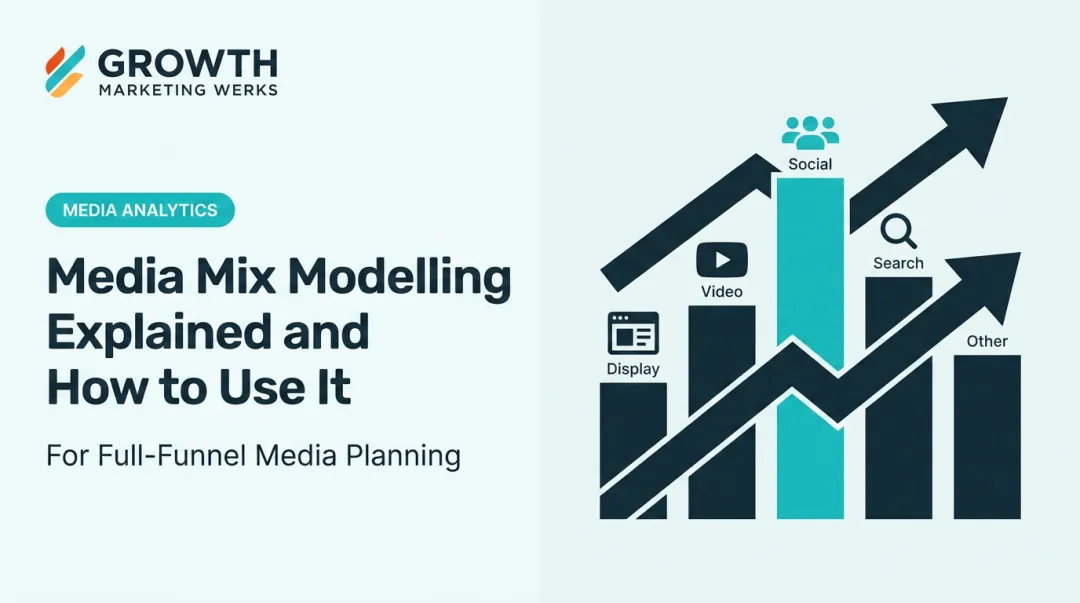
MMM is a statistical analysis of historical data that estimates how each marketing channel and external factor contributes to a business KPI like sales. It informs smarter cross-channel budget allocation over time.
How often to review or update your media mix?
Review channel-level performance continuously, run a more structured effectiveness check quarterly, and revisit overall allocation through MMM about twice a year. Wait until you have enough data to validate any change before acting on it.