
A media plan is the strategic blueprint that determines who you're reaching, where, when, and how much you're investing before any placement is purchased. Without one, campaigns default to gut instinct, channel familiarity, and whatever worked last quarter. With one, every dollar has a defined job.
This guide covers what a media plan is, why it matters, how to build one step by step, and what separates plans that drive results from ones that just generate reports.
Key Takeaways
- A media plan is a strategic document, not a budget spreadsheet or channel list
- Media planning (strategy) and media buying (execution) are distinct phases; confusing them creates reactive, inefficient campaigns
- Effective plans are built around audience insights and business goals, not channel trends
- The most common failures come from skipping foundational steps: vague objectives, surface-level audience research, and no measurement framework
- Agencies paid on commission have a built-in incentive to spend more. Flat-fee advisory models tie success to your results, not your budget size
What Is a Media Plan?
A media plan is a strategic blueprint for an advertising campaign. It specifies your target audience, the channels you'll use, how budget is allocated across those channels, when placements run, and the KPIs that define success. Every execution decision flows from this document.
What a Complete Media Plan Includes
A plan missing any of these elements creates room for costly missteps:
- Campaign goals and KPIs: specific, measurable objectives tied to business outcomes
- Target audience definition: behavioral profiles, not just demographics
- Channel and media mix: with clear rationale for each selection
- Budget breakdown by channel: with flexibility for optimization
- Scheduling and flight strategy: when and how frequently placements run
- Messaging direction: creative alignment with campaign objectives
- Measurement and reporting framework: defined before launch, not retrofitted after

Media Planning vs. Media Buying
These are two distinct phases that often get conflated:
- Media planning is the strategic phase: defining what to do, why, and how to measure success
- Media buying is the execution phase: negotiating rates, purchasing placements, trafficking ads
Strong planning is what makes buying efficient. Without it, you're spending without direction. Agencies that treat these as the same activity tend to skip the strategic work, and clients pay for it in wasted spend.
Why Media Planning Is Critical for Effective Campaigns
What Planning Makes Possible
According to Nielsen's 2022 ROI Report, 50% of planned media channel investments are underinvested by a median of 50%, and correcting this misallocation could improve ROI by 50%. Kantar separately found that campaigns with the right media spend allocation are 2.6x more effective than those without.
A structured media plan enables:
- Alignment between media investment and specific business goals
- Budget protection against wrong channels or wrong audiences
- Consistent messaging across touchpoints
- A performance baseline to optimize against mid-flight
What Goes Wrong Without One
Without a plan, campaigns default to what feels familiar. Budgets lock into underperforming channels. Messaging fragments across teams. And when the campaign ends, there's no framework to evaluate what actually worked.
Consider a common scenario: a brand splits budget across five channels without audience data, runs for eight weeks, and then can't attribute results to any single channel because nothing was tracked consistently. The campaign finished. The learning didn't.
Why This Matters Especially for Mission-Driven Organizations
That scenario is costly for any brand, but for nonprofits, senior care organizations, and organizations serving the older adult market operating with constrained budgets, it's a risk they can't afford to repeat. M+R Benchmarks found that search advertising produced a ROAS of $2.70 for nonprofits in 2023, compared to $0.13 for Google Grants alone. The difference between those outcomes is a planning problem.
Every media dollar in these organizations needs to work harder. When each channel plays a defined, measurable role in a coordinated plan, media stops being a line-item expense and starts functioning as one full-funnel portfolio of campaigns where returns are tracked, allocation decisions are intentional, and underperformers get cut.
How to Build a Media Plan Step by Step
Building a media plan is a structured process. Each step informs the next, and skipping steps early creates problems at execution. Here are the six key phases.
Step 1: Define Your Campaign Goals and KPIs
Every plan must start with a specific, measurable objective tied to a business outcome, not just "increase awareness." For example: generate 200 qualified leads at a $150 cost per acquisition within 90 days.
Goals connects to the broader business strategy, not just marketing metrics. Both the agency and client must agree on KPIs before strategy development begins. Without this alignment upfront, campaigns often measure the wrong things.
Step 2: Research Your Target Audience
Audience research goes beyond age and location. Effective planning requires understanding:
- Behavioral patterns and media consumption habits
- Device usage and platform preferences
- Purchase intent signals and motivations
- Where prospects are in the decision-making journey
Combine first-party data (CRM, website analytics) with syndicated research tools like MRI-Simmons, Nielsen, and ComScore. IAB's State of Data 2024 found that nearly 9 in 10 ad buyers reported shifts in how they use first-, second-, and third-party data, making a multi-source audience strategy more important as signal loss accelerates.
Step 3: Analyze the Competitive Landscape
Competitive analysis shapes channel strategy and budget decisions before a dollar is committed. It reveals:
- Which channels competitors are saturating
- Where gaps exist for differentiated timing or placement
- What messaging they're leading with
- Whether your budget can realistically compete head-to-head or needs to find differentiated ground
Tools like Semrush's Advertising Research and Sensor Tower's Pathmatics provide visibility into competitor paid search strategies, ad creatives, impression share, and spend across channels.
Step 4: Select Your Channel Mix and Allocate Budget
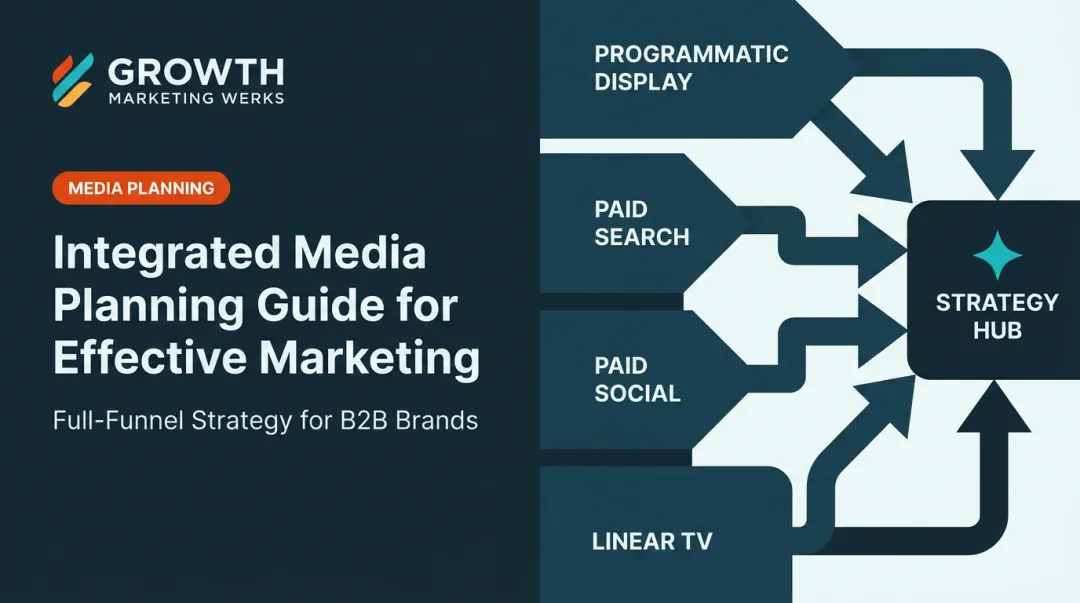
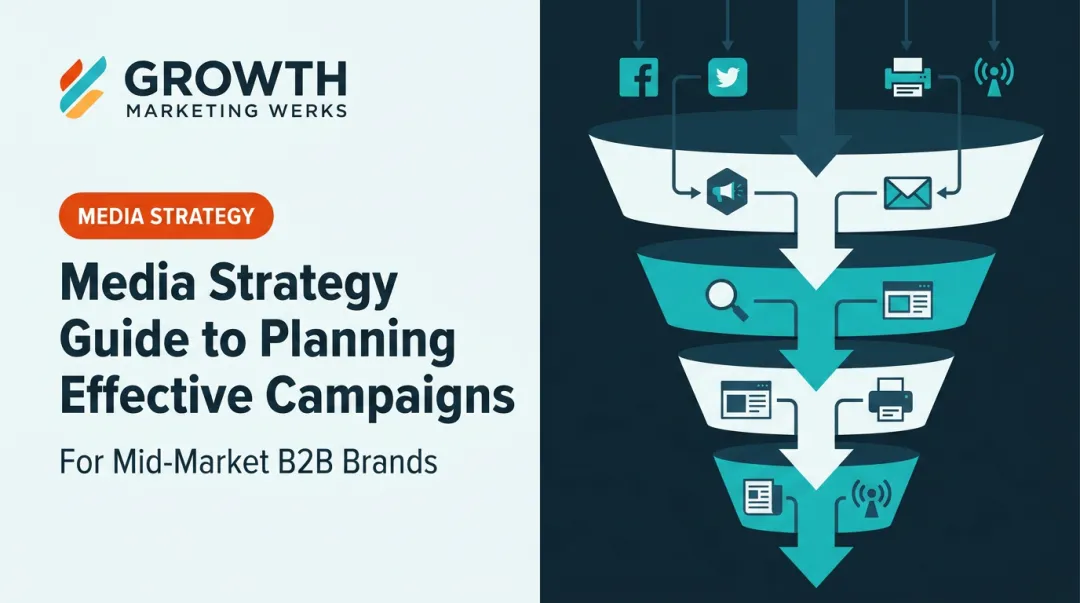
Channel selection is driven by where your audience actually spends time and which channels serve the right funnel stage: awareness, consideration, or conversion. The mix typically spans:
- Digital: paid search, paid social, programmatic, display, CTV/streaming
- Traditional: TV, radio, OOH, print
Channel allocation is planned across the whole campaign portfolio: concentration in one channel creates unnecessary risk. Budget allocation stays flexible too, with reserved capacity to shift spend based on mid-flight performance data.
Step 5: Develop Your Scheduling Strategy
Three primary scheduling approaches exist, each suited to different conditions:
| Approach | Description | Best For |
|---|---|---|
| Continuity | Steady presence throughout the campaign | Always-on brand building, long consideration cycles |
| Flighting | Alternating active and dark periods | Seasonal businesses, budget constraints |
| Pulsing | Baseline with strategic intensity bursts | Products with seasonal peaks but year-round demand |

Scheduling must also account for day-parting, key dates relevant to your audience, and what competitors are doing during the same window.
Step 6: Set Up Measurement and Reporting Before Launch
Once scheduling is locked, measurement infrastructure needs to be in place before the campaign goes live. Retrofitting tracking after launch means losing early data. Configuration covers:
- Defining primary KPIs (tied directly to campaign goals) vs. secondary KPIs (directional indicators)
- Setting up tracking pixels and UTM parameters
- Configuring conversion events across platforms
- Establishing a reporting cadence
Growth Marketing Werks uses Datorama as its data aggregation and visualization platform, giving clients a unified view of campaign performance across all channels and full user journey attribution, connecting media exposure to pipeline contribution and revenue. That unified view makes mid-flight optimization faster and more grounded than pulling reports channel by channel.
Key Factors That Shape Media Plan Effectiveness
Executing the right steps matters, but these variables determine whether those steps actually translate to results.
Audience Data Quality
The accuracy of your audience data directly determines targeting performance. Nielsen found that campaigns reaching their intended audience generated an average ROI of $2.60 per $1 spent, compared to $0.25 for campaigns that under-delivered on audience targeting. Nielsen also reported that nearly 40% of U.S. desktop and mobile ads were off-target for age and gender. Surface-level data doesn't just limit results. It actively wastes budget.
Budget Philosophy
A rigid budget that can't move mid-campaign is a liability. Effective plans reserve capacity for testing and reallocation based on live performance.
There's also an incentive problem worth naming directly. Agencies compensated on a percentage of media investment benefit financially from spending more, not from spending smarter. ANA found that principal transactions (where agencies buy and resell media inventory) can involve markups of 30% to 90%.
A flat-fee advisory model eliminates this conflict. Growth Marketing Werks structures fees around client growth, not ad volume, which keeps channel recommendations genuinely media-agnostic.

Channel Mix Diversification
Over-reliance on a single platform creates fragility. Nielsen found that adding upper-funnel marketing to existing mid-funnel campaigns can boost ROI by 70%. Different channels serve different buyer journey stages, and an integrated approach reinforces messaging across multiple touchpoints rather than betting everything on one.
Timing and Scheduling Discipline
Even the right message on the right channel underperforms with wrong timing. Scheduling decisions are driven by audience behavior data, seasonal factors, and campaign phase logic, not convenience or launch date pressure.
Key inputs for scheduling decisions include:
- Audience behavior patterns: when your target segments are most active on each channel
- Seasonal demand cycles: industry peaks, buying windows, and competitor activity
- Campaign phase logic: awareness, consideration, and conversion phases require different timing cadences
Measurement Framework Rigor
Only 32% of marketers measure traditional and digital media spend holistically, according to Nielsen's 2025 Annual Marketing Report. Plans without a unified measurement framework produce data that's hard to act on. Decide before launch which metrics are primary and how data from different channels will be consolidated into a coherent performance view.

Common Media Planning Mistakes
Treating a media plan as a logistics document. A real media plan is a strategic argument for why specific channels, audiences, timing, and messages will produce a specific business outcome. Teams that approach it as a scheduling exercise consistently underperform.
Skipping audience research and defaulting to familiar channels. Many brands invest heavily in platforms their audience doesn't actually use in meaningful numbers, simply because those platforms are visible or trending. Without data validating that your target audience is active and reachable on a given channel, you're spending real dollars on a guess.
Consider the scale of the problem: ANA found the average programmatic campaign ran on 44,000 websites, even though a high percentage of target audiences can often be reached on just a few hundred sites.
Measuring campaigns only after they end. Real-time performance monitoring separates high-performing plans from ones that only report what went wrong after the fact. The willingness to shift budget away from underperforming tactics while a campaign is still live is what drives results. A Nielsen case study with Samsonite found that daily monitoring and optimization produced a 65% improvement in frequency, an 85% on-target percentage, and more than 25% savings in campaign costs.
Frequently Asked Questions
What is in a media plan?
A media plan includes campaign goals and KPIs, target audience definition, selected media channels, budget allocation by channel, scheduling/flight strategy, messaging direction, and a measurement framework. Every element must work together to support the campaign objective.
What is an example of a media plan?
A nonprofit awareness campaign might allocate budget across programmatic display, Meta paid social, and CTV, running on a continuity schedule over eight weeks. The primary KPI would be cost per awareness conversion, with weekly reporting through a unified dashboard. Channel selection, budget, and KPIs are all tied to the same audience and objective.
What is the difference between media planning and media buying?
Media planning is the strategic phase: defining goals, audiences, channels, budget, and timing. Media buying is the execution phase: negotiating rates, purchasing placements, and trafficking ads. Planning sets the direction; buying delivers it.
How do I choose the right media channels for my campaign?
Channel selection is driven by where your target audience is most active, what funnel stage you're addressing, and which channels offer the targeting and measurement capabilities to track success. What's trending or most familiar is not a sufficient reason to include a channel.
How often does a media plan need updating or revised?
A media plan sets strategic direction upfront but is reviewed regularly during the campaign, typically weekly or biweekly, based on performance data, pacing, and shifts in audience behavior or competitive activity. Plans that only get reviewed at the end miss the opportunity to optimize while it still matters.
What are the most important KPIs to track in a media plan?
KPIs depend on the campaign objective: awareness campaigns track reach, impressions, and frequency; conversion campaigns focus on leads, cost per acquisition, and ROAS; engagement campaigns measure clicks, video completion rates, and time on site. Define KPIs before launch based on your stated business goal, not after results come in.