: The Ultimate 2026 Guide](https://file-host.link/website/growthmarketingwerks-1vcu9i/assets/refined-images/1784795551723000_f8075c9f9a7c4704a374f6b903b35707/360.webp)
Many marketers assume "building a paid media plan" is a matter of picking channels and setting a budget. In practice, outcomes swing wildly based on how objectives, audience data, channel mix, and budget allocation are configured and executed.
This guide walks through the exact steps to build a 2026-ready paid media plan, the variables that quietly make or break performance, the mistakes that trip up even experienced teams, and when it's time to bring in outside expertise.
Key Takeaways
- A paid media plan aligns objectives, audience, budget, and creative into one roadmap
- 2026 plans need flexibility for privacy shifts, AI optimization, and first-party data
- Weak KPIs and budget misallocation, not weak channels, cause most underperformance
- Running paid media as one full-funnel portfolio of campaigns drives steadier, longer-term ROI
How to Build a Paid Media Plan Step-by-Step
Step 1: Define Objectives, KPIs, and Prerequisites
Objectives need to be SMART: Specific, Measurable, Achievable, Relevant, Time-bound. They also need to tie directly to business outcomes, such as pipeline, revenue, or enrollment, rather than impressions or clicks.
Before any planning begins, confirm you have:
- Historical performance data from previous campaigns or platforms
- Access to CRM and analytics tools so you can track results past the click
- Stakeholder alignment on what "success" actually means
- A defined budget range, even if it's not finalized
Growth Marketing Werks starts every engagement with collaborative discovery sessions that define a client's ideal customer profile, sales model, and what a "qualified pipeline" actually looks like before a single dollar is planned. Skipping this groundwork is how teams end up optimizing for the wrong thing six weeks in.
Step 2: Research and Define Your Target Audience
Basic demographics won't cut it in 2026. Build personas using first-party data, CRM insights, and platform-native audience tools together.
That typically means layering:
- CRM data: closed-won accounts, high-LTV segments, and closed-lost lists for re-engagement or suppression
- Platform audience tools inside Meta, LinkedIn, Google, and programmatic exchanges
- Third-party research for firmographic and behavioral context where available
Before moving to channel selection, confirm two things: your audience segments are validated against real data (not assumptions), and the platforms you're considering can actually reach that audience at scale. A niche professional segment might be too small for broad prospecting but perfect for a narrow LinkedIn ABM push.
Step 3: Select the Right Channels and Platforms
Channel selection maps to funnel stage, not personal preference for a platform:
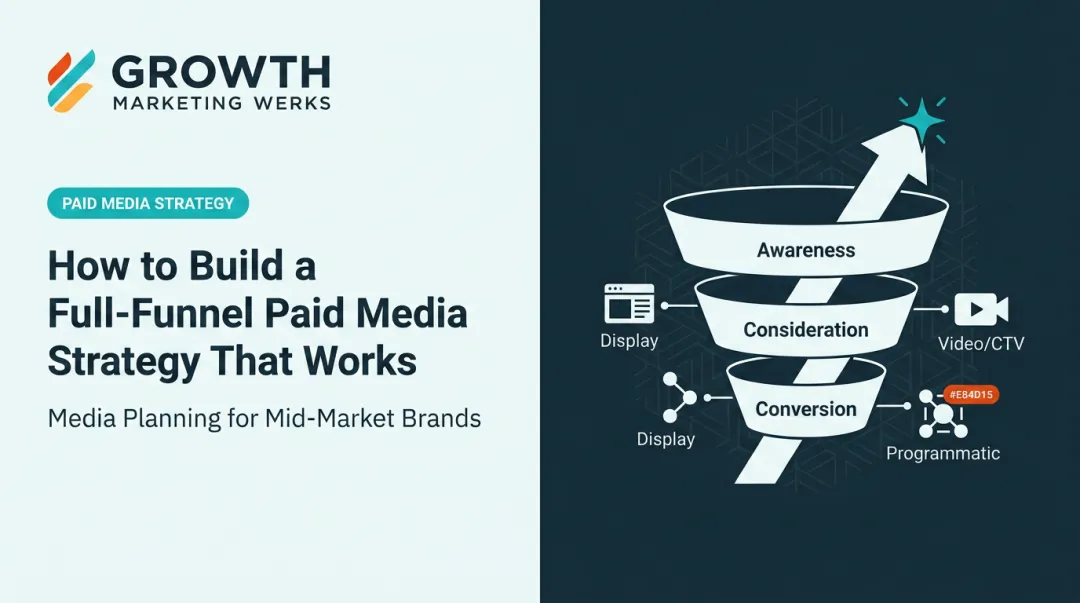
- Awareness: Video, CTV, social, programmatic display for reach and frequency
- Consideration: Search, native, content syndication, and retargeting for education
- Conversion: Search, lead-gen forms, and progressive retargeting for direct action

Budget share data backs up where the money is moving. Digital video plus CTV is projected to take 23% of total U.S. ad spending in 2026, with paid social close behind at 18.4%, according to IAB's 2026 forecast reported by MediaPost. Meanwhile, EMARKETER's 2026 forecast puts programmatic at 90% of worldwide display-ad budgets, positioning it as the dominant buying method rather than a standalone channel.
| Channel/Format | Share Evidence | Scope |
|---|---|---|
| Video + CTV | 23% | U.S. total ad spend, 2026 |
| Paid social | 18.4% | U.S. total ad spend, 2026 |
| Programmatic | 90% | Worldwide display budgets |
| Paid search | 39.8% | U.S. internet ad revenue (2024 baseline) |
The paid-search figure above reflects a 2024 baseline from IAB, offering a lower-bound comparison point for search's historically dominant share. Growth Marketing Werks' case studies reflect this same funnel logic in practice. Pinnacol Assurance built awareness through niche publications, cable TV, and always-on search, driving a 70% year-over-year increase in unaided brand awareness. Trimble shifted budget toward mid-funnel print, display, and eNewsletter placements and saw a 2,234% increase in click-through rate.
Step 4: Allocate Budget Across the Media Mix
There's no single "correct" allocation formula. Most teams use one of three approaches:
- Percentage of revenue: a fixed share tied to overall marketing budget
- CAC-based: reverse-engineered from target customer acquisition cost
- Objective-based: budget assigned per funnel stage based on what each stage needs to prove
Whichever method you choose, split spend across top, middle, and bottom-funnel tactics rather than pouring everything into conversion. Before launch, verify platform minimum spend requirements (some platforms need volume to exit the learning phase) and reserve 10-20% of budget for testing new formats or audiences.
Growth Marketing Werks applies what it calls an investor mindset here, framing every decision around where each dollar delivers the greatest measurable return rather than simply how much gets spent. That typically means giving each funnel stage its own dedicated budget and creative, and waiting for 2-3 months of stable data before scaling into new stages.
Step 5: Develop Ad Creative and Messaging by Funnel Stage
Creative and messaging shifts with the funnel, not stay static across the whole campaign:
- Awareness: Educational, problem-focused messaging with a low-commitment CTA like "Learn More"
- Consideration: Deeper content solving a specific pain point, often ungated
- Conversion: Proof-driven messaging (case studies, testimonials) paired with a gated, high-value asset
Inputs that matter here include brand guidelines, past creative performance data, and a testing calendar for ongoing iteration. Structured A/B testing, not gut instinct, decides which message wins.
Step 6: Set Up Measurement, Launch, and Optimize
Before launch, verify your tracking infrastructure is actually working: UTMs configured correctly, conversion pixels firing, and attribution setup connected to your CRM. Launching without this confirmed makes every optimization decision a guess.
Once live, build in:
- A review cadence: weekly or bi-weekly checks on core KPIs
- Predefined optimization triggers tied to specific metrics (a CPA threshold, a conversion rate floor)
- Quarterly strategic reviews to reassess targeting, creative, and budget allocation as market conditions shift
Key Variables That Determine Your Paid Media Plan's Success
Even a well-structured plan can underperform if these variables aren't actively managed throughout the campaign, not just at launch.
Budget and Bid Strategy. Underfunded campaigns exit the learning phase too early, and poor bid strategy inflates cost per result. Both directly affect reach, frequency, and cost efficiency across every channel you're running.
Audience Data Quality and Targeting Precision
With privacy regulation accelerating (IAB's Fifth Amended Multi-State Privacy Agreement took effect in June 2026), first-party data and contextual signals matter more than third-party cookies ever did. Poor data quality means wasted impressions and inflated acquisition costs, plain and simple.
Growth Marketing Werks addresses this through CRM data activation (hashed customer lists, suppression logic, closed-loop attribution) and contextual targeting that reaches audiences based on content, not personal profiles. This approach proves more resilient as behavioral data continues to degrade.
Channel and Funnel Alignment
Mismatched assignments, like running bottom-funnel conversion tactics against a cold, unaware audience, waste budget fast. Proper alignment improves conversion rates and shortens the path to purchase, because prospects are getting the message that actually fits where they are.
Attribution Model and Measurement Framework
Last-click attribution undervalues upper-funnel channels, which skews budget decisions toward whatever converts last, not whatever actually drove the sale. A multi-touch or data-driven model gives a more accurate read on true ROAS.

Google reported that one advertiser using data-driven attribution paired with Smart Bidding generated 29% more conversions while reducing cost per conversion by 28%. This mirrors how a flat-fee strategy-first media expert evaluates full-funnel contribution, including channels that are harder to measure, rather than chasing whichever single metric is easiest to report.
Common Mistakes to Avoid When Building a Paid Media Plan
Four mistakes account for most underperforming plans:
- Skipping audience research: defaulting to broad demographic targeting instead of validated, first-party personas
- Overloading bottom-funnel spend: starving awareness campaigns, which drains future pipeline over time
- Launching without verified tracking: making every optimization decision unreliable from day one
- Treating the plan as "set and forget": no recurring review cadence, no testing budget, no room to adapt
Growth Marketing Werks' Media Director has noted a persistent translation gap between marketers and their agencies: a client says "we need demand generation," and the agency runs awareness ads with no conversion path. That miscommunication alone can cost companies thousands in wasted spend every month.
When to Build, Refresh, or Outsource Your Paid Media Plan
Build a new plan when:
- Launching a new product or service
- Entering a new market or geography
- Starting an annual or quarterly planning cycle
Refresh an existing plan when:
- Performance is declining without an obvious cause
- Platform or privacy policy changes affect targeting capability
- Funnel stages exist with no dedicated spend or creative
Bring in a strategic media partner when:
- You lack in-house certifications across multiple platforms
- You need full-funnel, cross-channel management
- You want an advisor whose incentives align with growth, not media investment
That last point is worth sitting with. Commission-based agencies get paid more when budgets grow, regardless of results. Growth Marketing Werks operates on a flat-fee model instead, meaning the only incentive is client growth.
That structure showed up in the TalentReef engagement, where a three-year, multi-channel strategy drove 179% sales growth and 141% SQL growth. It also showed up in Enstrom's portfolio approach across direct-to-consumer, wholesale, Amazon, and retail, which surfaced an unexpected halo effect: in-store campaigns lifted online sales too, driving 8x ROAS on digital spend alone.

Conclusion
A strong paid media plan in 2026 stays in motion long after launch. It gets reviewed and rebalanced constantly, with testing built into every cycle.
Even with that discipline, plan failures rarely come from the channels themselves. Unclear objectives and weak audience data are usually the real culprits, along with optimization that stalls after launch.
Build your paid media plan as one portfolio of campaigns across the full funnel: it needs coverage at every stage and consistent reallocation to keep growing. If your internal team doesn't have the bandwidth for that ongoing work, Growth Marketing Werks offers a free 30-minute strategy session to review where your plan stands.
Frequently Asked Questions
What is a paid media plan?
A paid media plan is a documented roadmap covering objectives, audience, channels, budget, and measurement that guides how paid advertising gets executed. It translates business goals into specific, actionable steps.
What is an example of a paid media strategy?
An enterprise organization might allocate budget across LinkedIn for lead generation, search for capturing existing demand, and retargeting to convert website visitors, all tied to a specific pipeline goal rather than impressions.
How much does paid media cost?
Cost varies by channel and bidding model. Paid search CPCs average around $5.26, while Facebook traffic clicks cost closer to $0.70. Most teams set budgets as a percentage of revenue or tied to a CAC target.
How is a media plan different from a media strategy?
Strategy defines the direction: which audiences to target and what objectives to pursue. The plan translates that direction into specifics, covering budget, timeline, and channel details.
How long does it take to build a paid media plan?
Timelines vary by complexity. A single-channel campaign might come together in a few days, while a full-funnel, multi-channel plan can take several weeks of research, strategy, and setup.
How often does a paid media plan need updating?
Plan for a formal strategic review at least quarterly, with lighter performance check-ins weekly or bi-weekly. Market shifts, platform changes, and new data can all justify moving up that timeline.